




Every day, retail business owners have a laundry list of tasks to complete. Talking to customers, tidying the store, scheduling staff shifts for the following week … the list goes on. These tasks, processes, and procedures make up retail operations.
And retail operations impact your bottom line: Retailers lose 5.5% of gross sales to in-store inefficiencies. That’s $162.7 billion in lost revenue every year, according to a recent study by Coresight Research.
The culprits are the unglamorous, everyday breakdowns in retail operations: a promotion that didn’t execute correctly or a pricing error no one caught until a customer did.
Ahead, you’ll learn how to build retail operations that hold up in-store and online.
What are retail operations?
Retail operations refer to the daily activities, systems, and processes that allow online and brick-and-mortar stores to function efficiently and effectively. The goal is to enhance the customer shopping experience and lower the retailer’s costs.
At a glance, retail operations include:
- Supply chain/logistics management
- Cash operations
- Store layout (online and in-store)
- Customer service
- Order fulfillment
- Physical inventory management
- Data management
- Promotions and pricing
- Employee management
- Store safety and security
- Financial management
Each of these components pulls its own weight. A gap in any one area, whether that’s a fulfillment bottleneck or a poorly managed store layout, can ripple across the entire customer experience and your bottom line.
Retail store operations examples
There are 10 major components of retail store operations. Together, they keep businesses running smoothly, customer satisfaction high, and profit predictable and consistent.
Customer service
Store associates at physical locations have a unique opportunity to personally interact with each customer, but the customer experience is just as crucial for ecommerce. You can improve customer satisfaction through:
- Omnichannel help and support
- Quick deliveries
- Easy refunds and returns
- Fast resolutions to customer complaints
- Gathering customer feedback
- Inputting data into a customer relationship management (CRM) tool
Today’s customers expect digital and in-person channels to deliver a personalized shopping experience. This can feel like a tall order for brands with both a digital and physical presence, who are expected to bring consistency to both experiences.
With Shopify, you have access to unified customer profiles that are created whenever a customer shares their email address or phone number. Any first-party data you’ve collected on customers—whether that’s their order history (both online and in-person), loyalty points they’ve earned, or conversations they’ve had with support—feeds back to this unified profile.
Spice retailer Pepper Palace uses this feature to gather insight on who its customers are, regardless of whether they shop online or at one of its more than 100 retail locations. Since adopting the platform, the retailer has grown its customer base by 900% and lifted monthly gross merchandise volume (GMV) by 127%.
“Moving to Shopify was critical to us growing the brand to where it is today,” says Paul Budonis, president and COO. “We’re able to open stores quicker, operate them with less overhead, and efficiently acquire customers who continue to support the brand online well after their first visit.”
Store management
Retail stores need to be accessible, easy to navigate, and well-staffed by knowledgeable team members. Your hiring and training policies should help team members feel prepared to deal with shoppers. The layout, music, and aesthetics of your physical store should also add to the shopping experience.
Day-to-day store operations include opening and closing procedures, cash drawer reconciliation, shift scheduling, and handling returns or escalated customer complaints. Inventory tasks like restocking shelves, conducting cycle counts, and maintaining visual merchandising standards keep the floor running and the numbers honest.
Shopify’s point of sale (POS) is built to handle the essentials natively and can do even more with other tools in the Shopify App Store.
- Scheduling and payroll. Apps like Homebase connect directly to the POS, allowing store managers to build shift schedules, track time, and run payroll from the same place they process transactions.
- Loyalty. Yotpo integrates with Shopify POS so staff can pull up a customer’s points balance and apply rewards at the register; something clothing retailer Mizzen + Main uses to keep rewards consistent whether a customer shops online or in-store.
- Reporting. PDPAOLA’s chief business development officer Miquel Cardona credits Shopify’s unified dashboard for making it easy to monitor sales key performance indicators (KPIs) across physical and online channels daily.
Read more: 15 Essential POS Integrations for Retail Growth in 2026
Inventory management
Retailers need to be online to maximize their sales, but it can be challenging to distribute inventory correctly across all channels. For example, customers may prefer to purchase small items at your physical location and order bulky items online.
Inventory management is the system you create to organize inventory throughout the supply chain. It includes everything from ordering goods to properly storing items. An efficient inventory management system enables your business to maintain optimal inventory levels.
You can avoid costly overstocking and stockouts by adopting inventory management software that syncs real-time data from both online and physical stores. Further, automating purchase orders based on low-stock alerts can streamline the supply chain and improve operational efficiency.
You need to track the right metrics to know whether your inventory is flowing as it should. These are the core ones to watch:
- Inventory turnover rate. How many times you sell and replace your stock in a given period. A low rate signals overstocking or sluggish sales; a high rate means your cash is moving.
- Sell-through rate. The percentage of inventory sold within a specific period versus what was received.
- Gross margin return on investment (GMROI). How much gross profit you’re generating per dollar invested in inventory. It’s the metric that tells you which products are actually earning their shelf space.
- Days inventory on hand. How long your current stock will last at the current rate of sales; useful for timing reorders against supplier lead times.
- Shrinkage rate. The gap between recorded and actual inventory, accounting for theft, damage, and admin errors.
Pro tip: Install the Stocky app to manage inventory from your Shopify POS dashboard. Generate inventory reports, track product performance, and replenish low stock with automated reordering features.
Payments and order processing
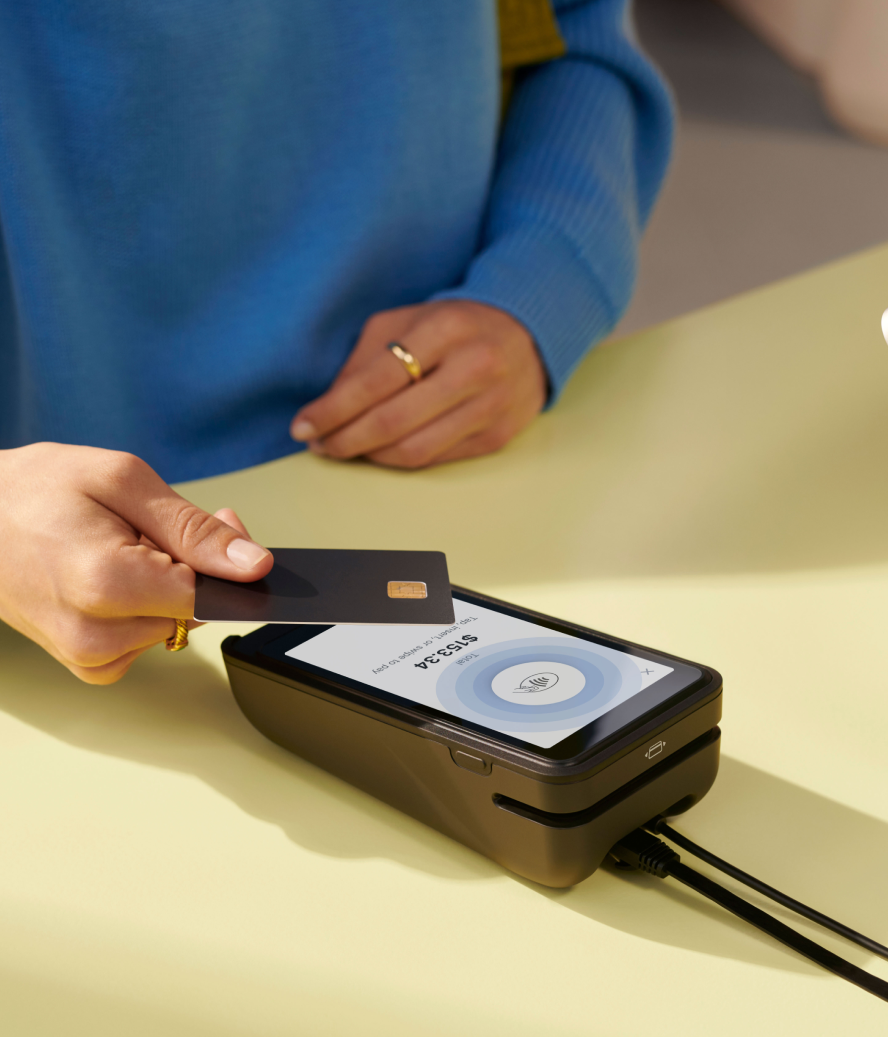
Retail operations include the payment methods you accept and how you process them at checkout. Most retailers have a POS system that enables them to serve customers, take payments, issue receipts, and keep track of sales.
Getting this part of retail operations right is two-fold: You’ll need a tech stack that makes it easy to process orders and regular staff training. Shopify POS offers POS hardware (think barcode scanners, receipt printers, and card readers) that are incredibly easy to use. Anyone with the appropriate user permission can jump onto the POS system and ring up orders.
Implementing an intuitive POS system can reduce the time employees spend at checkout, improving efficiency and allowing them to serve more customers faster.
Promotions and pricing
Optimove’s 2025 Consumer Holiday Retail Shopping Survey found that 80% of shoppers are concerned about inflation.
Promotions and pricing are one of the ways you can attract more customers. To make promotions effective, consider the following aspects of your retail ops strategy:
- Market research and competitor price analysis
- Pricing strategy—i.e., the discount or promotion customers are most likely to respond to
- Implementation, including the terms of the discount code and when it’s active
- Tracking sales data to evaluate success
Austin, Texas–based pet food retailer Tomlinson’s found it difficult to offer sales and promotions consistently. Customers could enroll in its loyalty or trade membership programs online, but when they tried to redeem their rewards in-store, cashiers had to click through many extra steps during checkout, elongating checkout queues and hindering retail productivity.
Tomlinson’s migrated to Shopify to unify its POS and ecommerce systems—and almost halved the number of taps required at checkout.
“Our customers can log into their online portal and see all their previous purchases, which wasn’t possible before,” says owner and operator Kate Knecht. “Their Pet Club Membership program is seamlessly managed through Shopify, allowing us to track memberships, apply discounts automatically, and provide a smooth experience for customers and staff.”
Supply chain management
The retail supply chain is the flow of products you receive from suppliers. Supply chain management involves tasks like reordering new stock once inventory levels drop below the minimum threshold, confirming that receiving inventory meets quality control standards, and maintaining strong relationships with suppliers.
Don’t overlook the importance of a well-managed supply chain—you can’t generate revenue without inventory to sell.
Order fulfillment
Order fulfillment is the final step in the supply chain process. It details how you’ll get products from your stockroom to your customers. In the traditional retail model, customers will come into your store, pick a product off the shelves, and head to your checkout desk with their credit card in hand.
Your retail operations strategy should define the different ways orders can be fulfilled and how these are managed. That might include:
- Buy online, pick up in-store (BOPIS)
- Curbside pickup
- Ship to home
- Ship to store
Home furnishings brand Parachute uses Shopify’s unified capabilities to offer hybrid fulfillment options. Customers can see inventory levels at their nearest store, pay for orders online, and pick them up later at their desired location. It’s proven to be popular: Parachute has increased BOPIS revenue by five time in just four years—all without having another system to operate.
“With Shopify POS, we now have a single point of truth for our inventory, which makes everything flow much more smoothly,” says founder Ariel Kaye.

Employee management
This part of retail operations covers the practical and legal side of managing employees, including recruiting new employees and onboarding them. It also includes rota scheduling and ensuring that health and safety procedures are being followed.
Shopify apps like EasyTeam are designed to make staff management easier. EasyTeam integrates with your POS system so you can see staff availability, let employees clock in and out, and offer commission on sales they make—all in the same system you use to manage other aspects of your retail operation.
Get inspired: Learn how Monos reduced POS training time to just half a day.
Financial management
Financial management allows retailers of all sizes to track profit, how much it costs to operate, and best-selling products.
Financial management covers:
- Forecasting. How much revenue you expect to generate over the coming year. Consumer shifts, market trends, supply chain disruption, or upcoming sales and promotions can impact this figure. Use AI demand forecasting tools to form more accurate projections.
- Cost control. Scrutinize every part of your retail operation to figure out where you’re overspending and how you can cut back. For example, you could negotiate better terms with suppliers for ordering in bulk, or cut down labor costs by balancing staff schedules with customer demand.
- Accounting and taxes. From reconciling bank statements to filing tax returns on time. Accounting keeps your store on the right side of the law and helps you avoid any late filing penalties.
Store safety and security
Loss prevention measures help prevent shoplifting or fraud from sabotaging your profits.
That includes:
- Share opening and closing procedures. A consistent daily checklist keeps your team accountable and reduces the risk of something slipping through.
- Opening: Inspect the exterior for signs of a break-in, confirm security cameras are live, count and verify the cash drawer, do a floor walk to check that displays and stock are in order, and confirm all staff are logged into their individual POS accounts.
- Closing: Reconcile the till and log any discrepancies, process end-of-day sales reports, secure all inventory in locked areas, check that fitting rooms and back-of-house are clear, and enable the alarm system before the last person exits.
- Give thorough staff training. Teach cashiers how to detect counterfeit notes, the signs of a shoplifter, and what to do if they notice suspicious behavior in your store.
- Buy commercial insurance. General liability insurance tends to cover any issues that arise if a customer is injured in your store or your property is damaged.
- Protect your retail technology. Choose a POS system and payment processor that keeps customer data safe. Shopify POS has several built-in features that help here:
- Every staff member gets a unique four to six digit PIN to access the POS app.
- POS roles and permissions allow you to control exactly what each staff member can see and do, like apply discounts and view customer data.
- You can also set manager approval so that a manager must enter their PIN before a staff member can process a refund or exchange, edit taxes, or add custom sales.
Read more: Navigating POS Security: Ensuring Safe Transactions in Retail
How to automate retail operations at your store
Although it’s tempting, tracking inventory with lengthy spreadsheets can get out of hand quickly. It’s time-consuming and puts you in danger of human error and poorly informed decisions that cost your business. Instead, integrate all your POS and inventory management systems and let the tech do the tedious work for you.
Automate where possible
When you automate your inventory management with high-quality software, you get access to helpful features like low-stock alerts, automated purchase orders, and inventory reporting. It’ll speed up your day-to-day admin, make it easier to accurately track your inventory, and help inform future purchasing decisions.
The best inventory management software accurately syncs your data in real time as stock is sold, received, or returned. Shopify, for example, collates inventory data from every sales channel—including your retail locations and ecommerce shipping warehouse—so you’ll always know how much inventory you have on hand.
Unify online and offline selling
Customers like to view goods in person before completing their purchase online. When jewelry brand Astrid & Miyu switched to the Shopify POS and began offering flexible ordering options like click-and-collect, it saw a fivefold increase in customers purchasing four or more times when shopping omnichannel.
Your tool stack directly influences your ability to offer these omnichannel experiences, without putting strain on your resources.
Rather than patch together fragmented systems, patchy APIs, and middleware, Shopify unifies POS and ecommerce on the same platform. Order, customer, and inventory data flows from a single back end—an approach that a recent EY POS Market report found:
- Offers a 22% lower total cost of ownership
- Improves productivity to save the equivalent of 0.4 full-time employees per store location
- Increases omnichannel GMV by as much as 150% year-over-year
Alexandra McNab, COO at Bared Footwear, says, “With Shopify, we have a unified commerce platform that makes the holistic experience we want to offer customers possible without burdening our team with clunky workarounds or high-risk situations.”
Offer experiential retail
Shoppers crave live in-person experiences, something you can offer by focusing on customer-centric interactions. These could be:
- Interactive product demos
- Workshops or classes
- Try-before-you-buy events
- Community-based events
- Pop-up showrooms
Experiential retail encourages customers to spend more time with your brand. Love Record Stores, for example, uses a physical retail store to host live music performances, DJ sets, and sell its merchandise. Experiential retail is a way for the brand to help a cause its customers support: reviving in-person music communities.
Optimize inventory management
Access to accurate real-time data is key to optimizing your inventory management. Be prepared to adopt new technology to make your existing inventory infrastructure more efficient.
Radio-frequency identification (RFID) tags enable you to better search, identify, and track items. Unlike traditional line-of-sight barcodes, RFID tags can be read at a distance and from any orientation for quicker inventory processing. This gives you better inventory visibility with the potential for more frequent updates.
Start performing quarterly inventory counts in cycles. Instead of counting everything at once, break it down into sections. Spend one cycle counting one area or type of inventory and the following on another item type or section in your warehouse. These inventory counts will help reduce the chance of costly overstocking or frustrating stockouts.
Streamline checkout
In retail, the online shopping cart abandonment rate is around 70%. Streamlining your checkout process means you’ll make it easier for shoppers to actually click buy.
In your physical locations, using a mobile POS system enables store staff to take payments anywhere in the store and virtually eliminates lines to pay at checkout. This line-busting tactic gives customers an efficient checkout experience.

Optimize returns and exchanges
The National Retail Federation’s (NRF’s) 2025 Retail Returns Landscape report projected that merchandise returns would reach $849.9 billion in 2025. But returns don’t need to be the end of the customer journey—they’re an opportunity to deepen your understanding of your customers’ requirements.
Buy online, return in-store (BORIS) offers the chance to meet and convert customers personally. Use the opportunity to learn more about the exact product specifics your customer is looking for and help them find it.
To encourage customers to shop with your brand again, offer a return to gift card option so they can choose to buy something else at a later date.
Challenges in retail operations
Retail operations have many moving parts, which present challenges including:
High operating costs
It costs money to keep your business running. Whether it’s a specialist operations manager, technology, or CCTV systems that protect your business from theft, these fixed costs can inflate operating costs. Double down on the financial management aspect of your operations to find ways to cut costs and remain profitable.
Employee turnover
Retail operations are most effective when staff follow procedures you’ve set. This is challenging when employees leave; you have to replace each employee and bring them up to speed with your policies and procedures. Documentation and structured onboarding programs make it easier.
Siloed data and systems
Your retail operating system likely spans POS systems, order fulfillment tools, and inventory management apps, all of which inflate costs and require more staff training time. Shopify solves this problem by building POS and ecommerce natively on the same platform, with a growing app store of more than 8,000 integrations to power your retail business from a single operating system.
Do I need to hire a retail operations management specialist?
Sometimes managing the day-to-day of a retail store is too much for one person to handle. It’s why many store owners hire a retail operations specialist to take ownership of processes and procedures, giving them more free time to spend on higher-impact tasks that will grow the business.
In March 2026, the average salary for a retail operations manager in the US was $72,736 per year. They might record inventory one day and create a loss prevention strategy another, but it’s their responsibility to:
- Record inventory and restock when required
- Implement health and safety procedures in-store
- Follow opening and closing procedures
- Train retail employees on how to follow procedures
- Suggest new retail technology (and own the implementation of it)
- Experiment with new sales techniques
Improving retail operations at your physical location
Now that you know the core elements of retail operations, you’re ready to put these tactics to work. Whether you’ve just set up your first online shop or are expanding to a physical store, these strategies will help your business succeed.
Shopify POS has all of the features you’ll need to manage retail operations, including inventory management and staff scheduling apps. Try the best-in-class POS system with all of the essential features baked in as standard.
Read more
- How To Empower Retail Employees With Technology
- How to Increase productivity and identify productivity killers
- HR Chatbots: How AI Can Help Onboard and Train Your Retail Employees
- Commercial Insurance: What Retailers Need to Know When Shopping for Coverage
- The 5 Most Expensive Payroll Errors—and How to Avoid Them
- Concrete Ways to Maintain Work-Life Balance as a Retailer
- Why Going Paperless Can Help Your Retail Business (And How to Do It)
Retail operations FAQ
What are examples of retail operations?
Retail operations include a wide range of activities, mainly:
- Inventory orchestration. Managing stock levels so you aren’t sitting on dead capital while your bestsellers are out of stock.
- POS management. Making sure the transaction is effortless.
- Supply chain and fulfillment. Moving goods from a warehouse to a shelf without the operational costs eating your entire margin.
- Visual merchandising. Using data-driven layouts to guide customer behavior toward high-margin items.
What are the tasks of retail operations?
Core tasks include:
- Staffing and labor optimization
- Loss prevention
- Store performance maintenance
- Customer service protocol
Is retail operations a skill?
Retail operations is less a single skill and more a working knowledge of multiple disciplines: inventory management, staff coordination, good customer service, loss prevention, and financial reporting, to name a few.
What is the goal of retail operations?
The goal of modern retail operations is profitable consistency. You’re aiming to maximize efficiency, reduce fiction, and protect your margins.

